

Inverse Relationship is an important concept in algebra that helps represent numbers using symbols and letters. A Inverse Property of Logarithms and exponentials allows us to write mathematical ideas in a simple and flexible form. In a Inverse Property of Logarithms and Exponentials, letters like x, y, or z are used to show unknown values, while numbers and operations define relationships. Learning the inverse property of Logarithms and Exponentials makes it easier to understand patterns and solve equations. A Log Exponential Cancellation is widely used in real-life situations such as calculating costs, measuring quantities, and solving problems step by step. By practicing Log Exponential Cancellation, students develop logical thinking and problem-solving skills.
Inverse Relationship
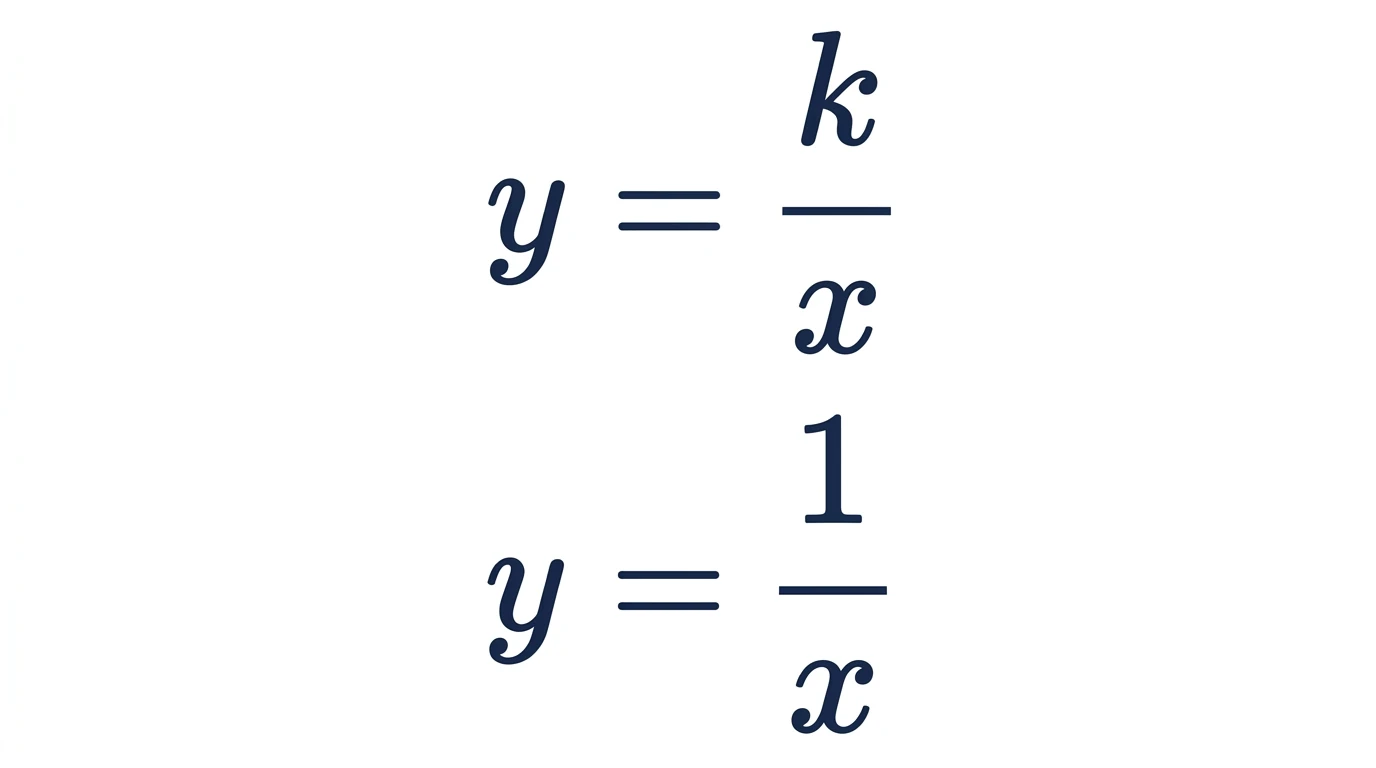
Inverse Relationship Formula
The Inverse Relationship between logarithms and exponents states:
b^(log_b(x)) = x and log_b(b^x) = x
for valid values.
Mathematical Proof of Inverse Relationship
1. INVERSE RELATIONSHIP (b^(log_b(x)) = x and log_b(b^x) = x)
Definition:
Logarithmic and exponential functions with the same base are inverse operations that undo each other.
Proof Idea:For b^(log_b(x)) = x: Let y = log_b(x), which by definition means b^y = x. Substituting back: b^(log_b(x)) = b^y = x. For log_b(b^x) = x: Let y = log_b(b^x), which means b^y = b^x by definition. Since the bases are equal, the exponents must be equal: y = x. Therefore log_b(b^x) = x.
Example:2^(log_2(16)) = 16 and log_2(2^5) = 5. Also 10^(log_10(50)) = 50 and log_10(10^3) = 3
Properties:These identities hold for all x > 0 in the first case and all real x in the second case
b must be positive and not equal to 1
These relationships define logarithm and exponent as inverse functions
The inverse relationship establishes that logarithms and exponentials are opposite operations, enabling simplification of composite expressions and solving of exponential and logarithmic equations.
Other Names of Inverse Relationship
Where Are Inverse Relationship Functions Used?
Inverse functions are used when you need to reverse the effect of another function and find the original input from a known output. They are widely applied in mathematics, science, engineering, finance, and technology.
1. Mathematics
Inverse functions help solve equations and determine unknown values.
Example:
- Function: y=3x+5y = 3x + 5
- Inverse: x=y−53x = \frac{y – 5}{3}
If the output is known, the inverse function finds the original input.
2. Finance and Banking
Inverse functions are used in:
- Loan calculations
- Interest rate analysis
- Investment planning
- Mortgage computations
They help determine principal amounts, interest rates, or investment periods from final values.
3. Physics
Many physical formulas require inverse functions to find unknown variables.
Examples:
- Inverse trigonometric functions in motion and force calculations
- Determining angles from measured distances
- Wave and signal analysis
4. Engineering
Engineers use inverse functions for:
- Control systems
- Circuit design
- Signal processing
- Robotics and automation
They help convert outputs back into the original system inputs.
5. Computer Science
Inverse functions are important in:
- Data encoding and decoding
- Cryptography
- Image processing
- Machine learning algorithms
Encryption and decryption often rely on reversible mathematical operations.
6. Economics
Economists use inverse functions to:
- Analyze demand and supply curves
- Determine prices from quantities
- Model market behavior
Example:
An inverse demand function expresses price as a function of quantity demanded.
7. Navigation and GPS Systems
Inverse trigonometric functions help calculate:
- Locations
- Distances
- Directions
- Satellite positioning
GPS technology uses these calculations extensively.
8. Medicine and Healthcare
Inverse functions assist in:
- Medical imaging
- Drug dosage calculations
- Statistical health analysis
- Diagnostic modeling
9. Statistics and Probability
They are used for:
- Finding percentiles
- Calculating z-scores
- Probability distributions
- Data analysis
Inverse cumulative distribution functions are common in statistical software.
10. Everyday Applications
Inverse functions appear in:
- Temperature conversions
- Currency conversions
- Unit conversions
- Calculating discounts and taxes
Example
If Fahrenheit is calculated as:
F=95C+32F = \frac{9}{5}C + 32
The inverse function finds Celsius:
C=59(F−32)C = \frac{5}{9}(F – 32)
This reverses the original conversion.
Summary
Inverse relationship functions are used whenever an output must be converted back to its original input. Common fields include mathematics, finance, engineering, physics, computer science, economics, healthcare, statistics, and navigation systems.
Conclusion
In conclusion, the inverse log property plays a key role in learning algebra and understanding mathematical relationships. A fundamental logarithm-exponential relationship helps represent unknown values and makes problem-solving more flexible. With regular practice, Fundamental Logarithm Exponential Relationship becomes easy to use in equations and real-life situations. It also builds a strong base for advanced topics like functions and algebraic equations. Mastering the fundamental logarithm-exponential relationship improves logical thinking and makes calculations more structured.
Overall, the inverse property of Logarithms and Exponentials in algebra is an essential concept that helps students grow in mathematics and confidently handle different types of algebra problems.